Quantifying the digital ecosystem of decentralised clinical trials

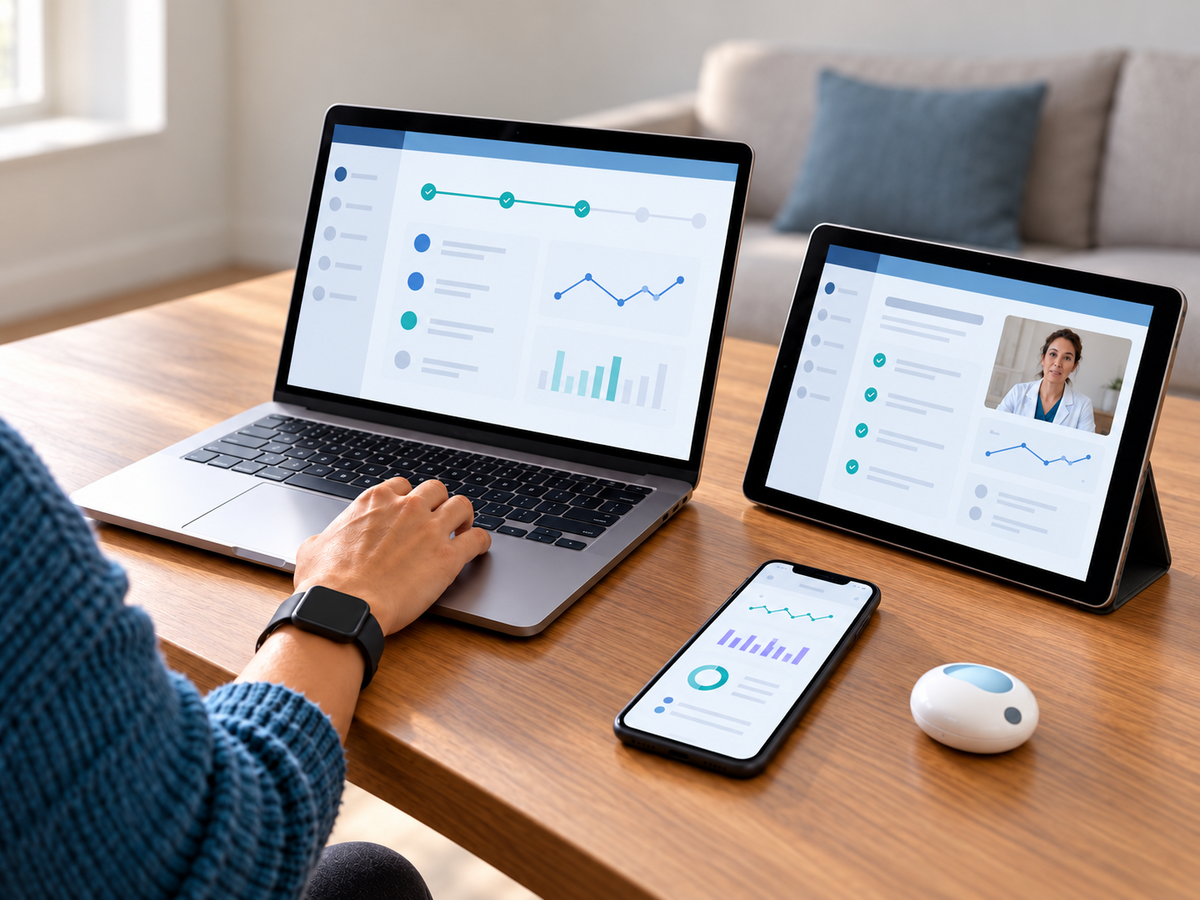
In a decentralised clinical trial, some study activities take place outside the main trial site. Participants might complete a questionnaire at home, speak with the study team by video, or use a wearable to collect data between visits. For research teams, each activity raises a practical question about which technology to use.
In a scoping review published in JMIR Medical Informatics, our team at the BHV Group at CERTH-ITI and our Trials@Home collaborators mapped 329 commercial technologies to the clinical trial activities they support. We built on the original Trials@Home technology scan from 2020, updated the search in 2024–2025, and checked and updated the catalogue again in June 2026.
🧭 Seven areas of clinical trial operations
We used publicly available information to identify the activities each tool supports. The number beside each area shows how many tools supported it. Each tool could be counted in more than one area.
- Setup and design (189 tools) — planning the study and setting up the systems it will use.
- Recruitment and enrolment (120 tools) — finding potential participants, checking their eligibility, and enrolling them.
- Data acquisition and processing (212 tools) — collecting, storing, checking, and preparing study data for analysis.
- Operation and coordination (220 tools) — scheduling visits, coordinating staff across study sites, and tracking day-to-day activities.
- Patient engagement (165 tools) — keeping participants informed and helping them stay involved throughout the study.
- Intervention and follow-up (122 tools) — delivering study interventions and carrying out follow-up assessments or check-ins.
- Close-out and reporting (125 tools) — completing study activities, archiving records, and preparing reports.
📊 What we found
Of the 329 commercial technologies we reviewed, 293 (89%) supported more than one area of clinical trial operations. The remaining 36 supported a single area.
Operation and coordination was the most widely supported area, with 220 tools, followed by data acquisition and processing (212) and setup and design (189). Recruitment and enrolment had the fewest tools (120).
We also looked at which areas were supported by the same tool. A pairing means that one tool supports both areas, even if it also supports others. The most common pairing was operation and coordination with data acquisition and processing, with 152 tools supporting both.
The three least common pairings all involved close-out and reporting. Few tools supported it alongside intervention and follow-up, recruitment and enrolment, or patient engagement.
🧰 How trial teams can use the catalogue
The full catalogue is available as a supplement to the article. It lists each tool, its vendor, a public link, and the activities it supports. Teams can start with the activities in their study protocol, identify tools that cover several of them, and see where they may need separate solutions.
The research was conducted as part of the Trials@Home consortium, with additional support from the ACCESS-AD project.
Trials@Home project website · ACCESS-AD project website
📄 Publication
Mpaltadoros L, Huber S, Stavropoulos TG, Buchgraber-Schnalzer B, Fons-Martínez J, Murciano-Gamborino C, Alcalde B, Pérez-Breva L, Nikolopoulos S, Kompatsiaris I, Hanke S. Quantifying the Digital Ecosystem of Commercial Technologies for Decentralized Clinical Trial Operations: Scoping Review. JMIR Med Inform. 2026;14:e86011. doi:10.2196/86011.