36th Alzheimer Europe Conference – Our Perspective
Where research meets real life
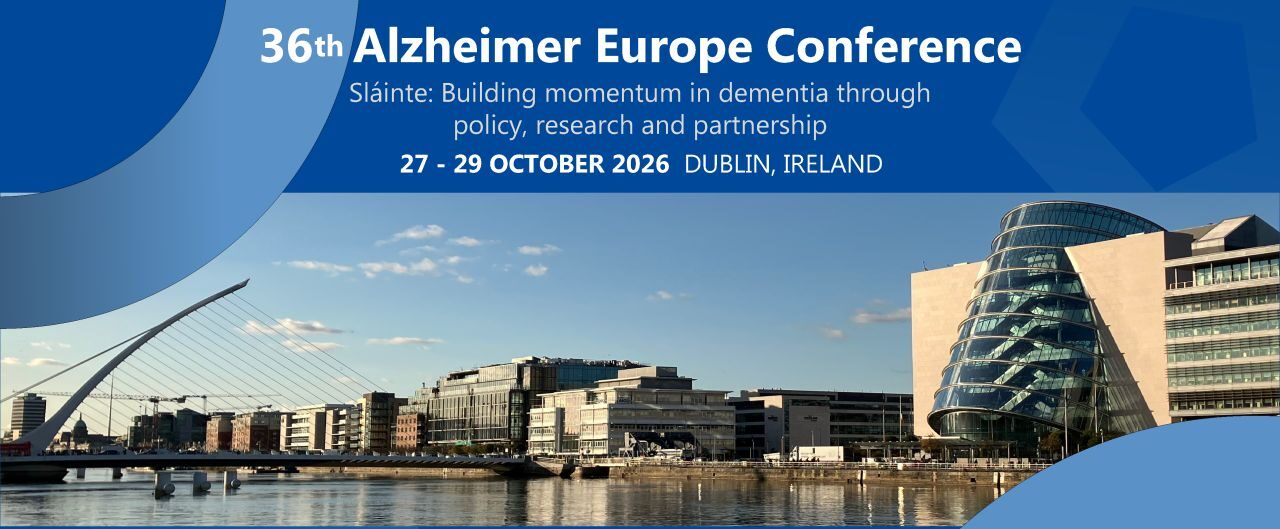
The 36th Alzheimer Europe Conference, held in Dublin on 27–29 October 2026, was a reminder of why our work matters. Among the scientific breakthroughs presented, it was the voices of people living with dementia – and those caring for them – that left the strongest impression.
Participants voiced their perspectives on AI: “I need a human to speak to”, highlighting the human connection as a primary need. What they wished technology could do? Preserve their memories. What they feared losing most? Their autonomy.
An industry-sponsored session offered something quietly striking: a poem read twice, forward and in reverse, its meaning shifting from loss to hope depending on direction. A simple, powerful metaphor for where dementia research is heading — from late-stage reactive care toward early intervention and prevention.
The human dimension showed up in policy discussions too. One speaker surfaced the blunt reality: “Who’s going to pay for that? That’s me, if it’s ten years from now.” On lifestyle interventions, the uncomfortable truth emerged that “healthy choices” are not equally available to everyone. And perhaps the most grounding line of the conference came from a patient advocate in response to a panel on new drug therapies: “We need the medicine. But we also need the exercise and other lifestyle interventions.”
Our team had the opportunity to represent our contributions to two IHI pharma industry – academia collaborations, each addressing a different aspect of dementia challenges:
PREDICTOM: can everyday tasks predict dementia risk?
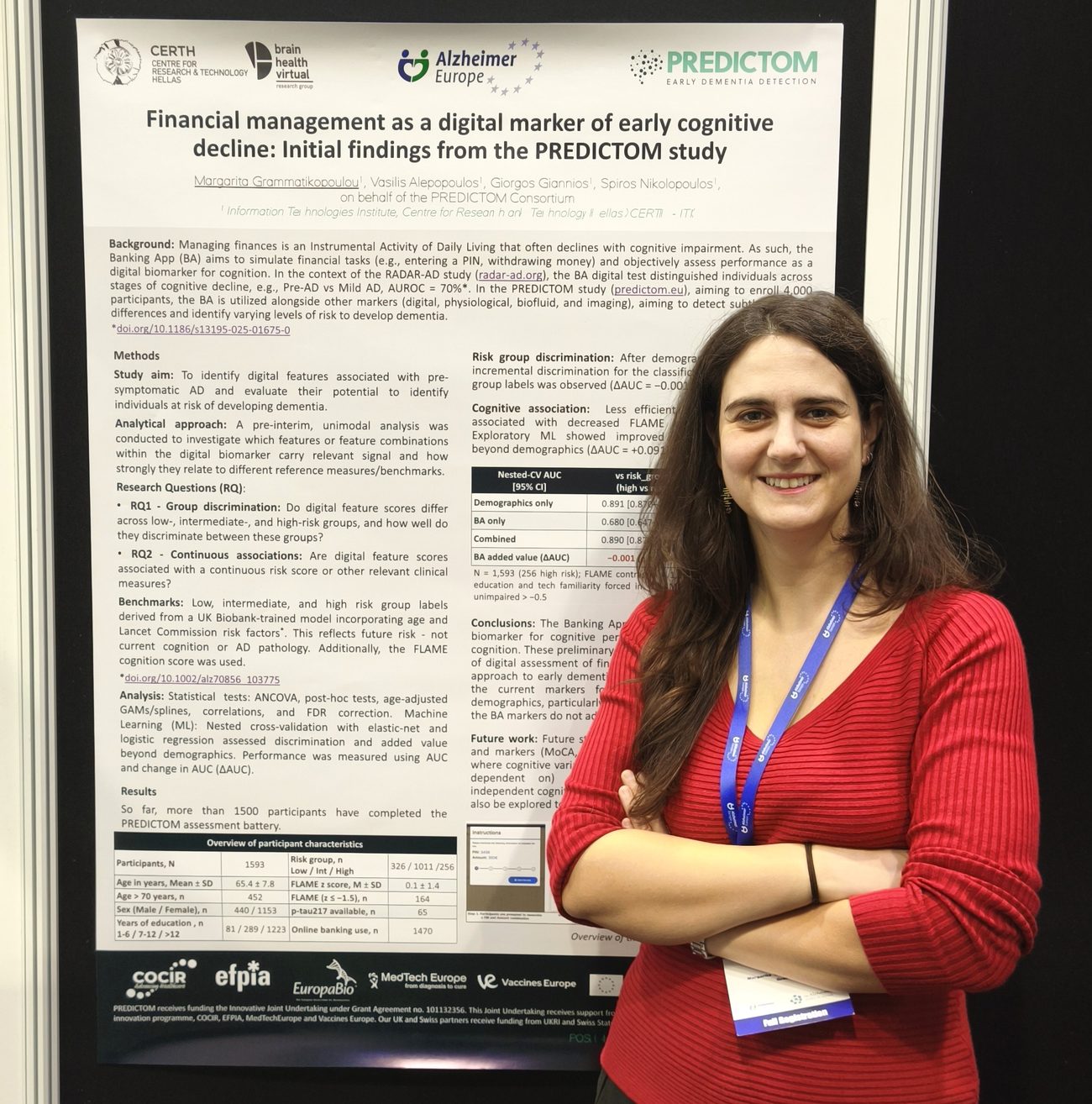
PREDICTOM is an IHI-funded collaboration between pharma industry and academia focused on predicting the risk of dementia through digital biomarkers. Our specific contribution is a digital assessment tool in the form of a simulated banking app – a task that mirrors the kind of financial management decisions people perform routinely in daily life.
The rationale is simple: subtle changes in how someone navigates financial tasks – decision time, error patterns, task completion – may signal early cognitive change before clinical symptoms appear. Margarita Grammatikopoulou presented a poster at the conference showcasing this digital biomarker approach, sparking conversations with researchers working on complementary assessment tools in similar projects.
ACCESS-AD: equitable access and the patient voice in wearable research
ACCESS-AD is a second IHI collaboration our team contributes to, which focuses on equitable access to care pathways and new disease-modifying therapies (DMTs) for Alzheimer’s disease. A recurring theme throughout the conference was the uneven landscape for DMTs: approved in some markets, unavailable in others, navigated largely in specialist centres, and rarely reaching rural or underserved communities.
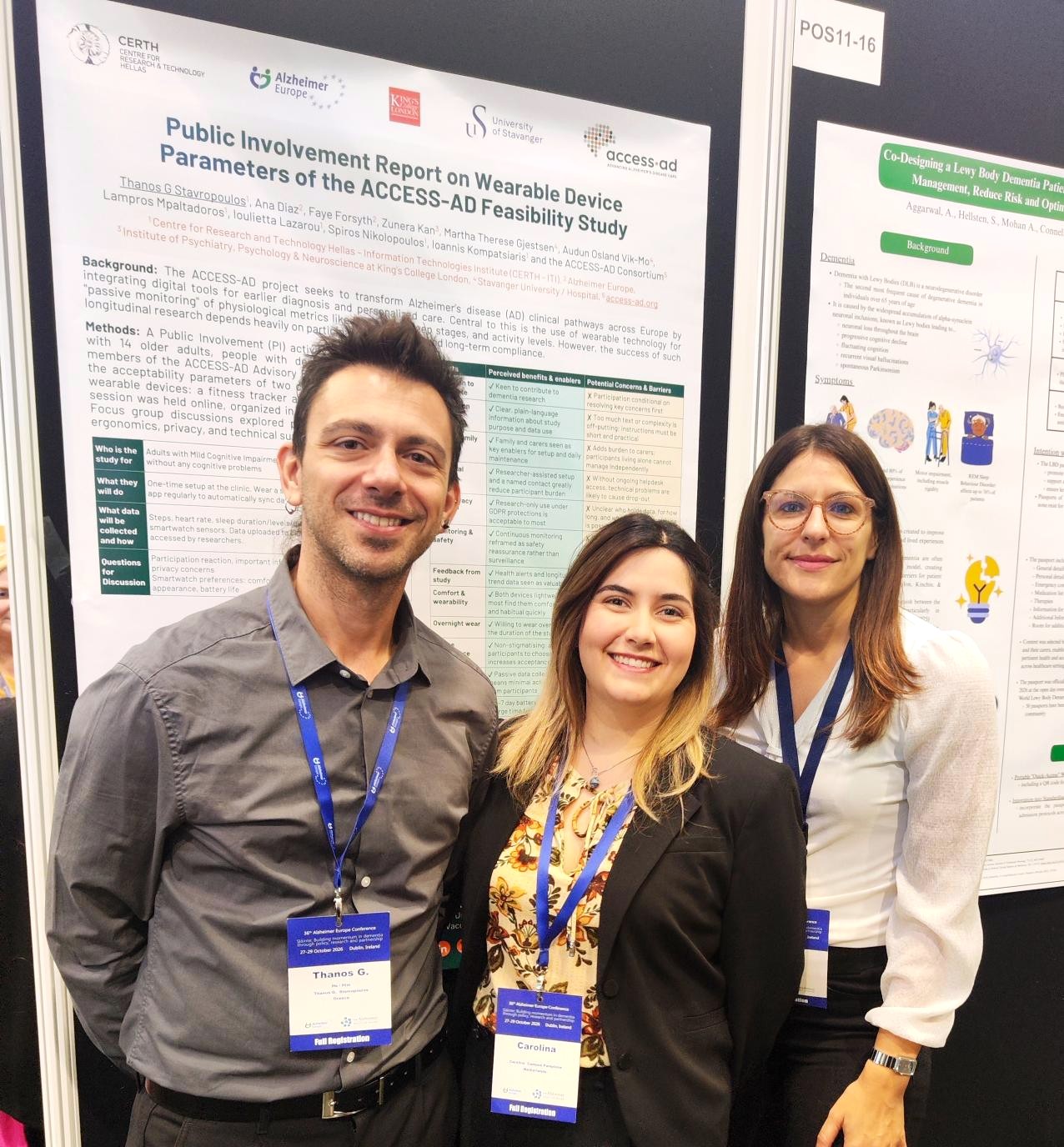
Thanos Stavropoulos presented a poster on including patient and carer perspectives in the deployment of wearable devices for the upcoming ACCESS-AD feasibility study. The study will use wearables to monitor quality of life (QoL) in real-world settings. Getting that design right means engaging patients and carers early – not as passive participants, but as co-designers. The work presented at the conference captures the insights gathered through that engagement and frames how they shaped the upcoming study.
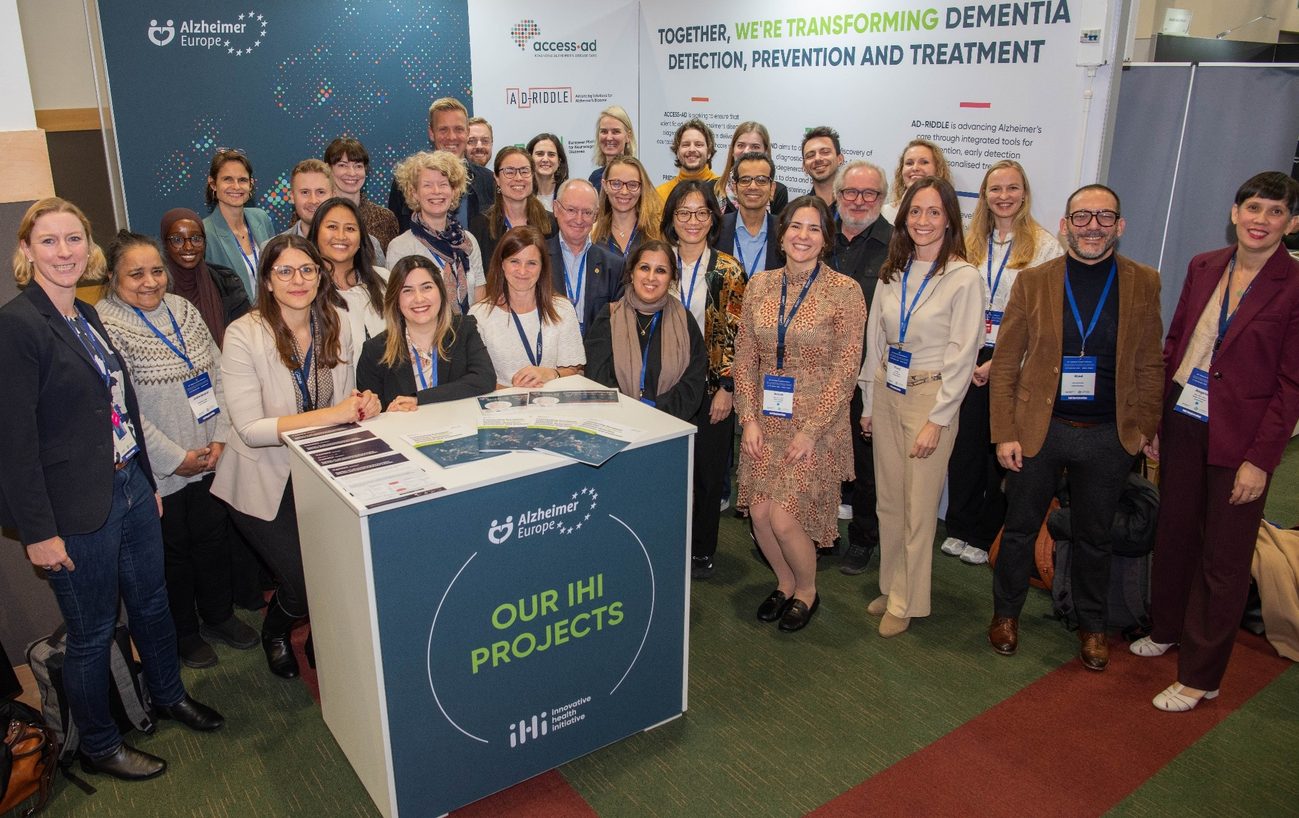
We also had the opportunity to meet our host and partner, Alzheimer Europe, partner Siemens Healthineers at their booth, and the PREDICTOM and ACCESS-AD partners featured in keynote talks and dedicated sessions.
Taken together, our two contributions reflect a shared conviction: that meaningful technology for dementia, such as digital biomarkers from apps and wearables, starts with the people it is meant to serve.