Bridging Heritage and Technology: EXCALIBUR’s 4th Consortium Meeting in Munich put museum needs at the heart of digital innovation
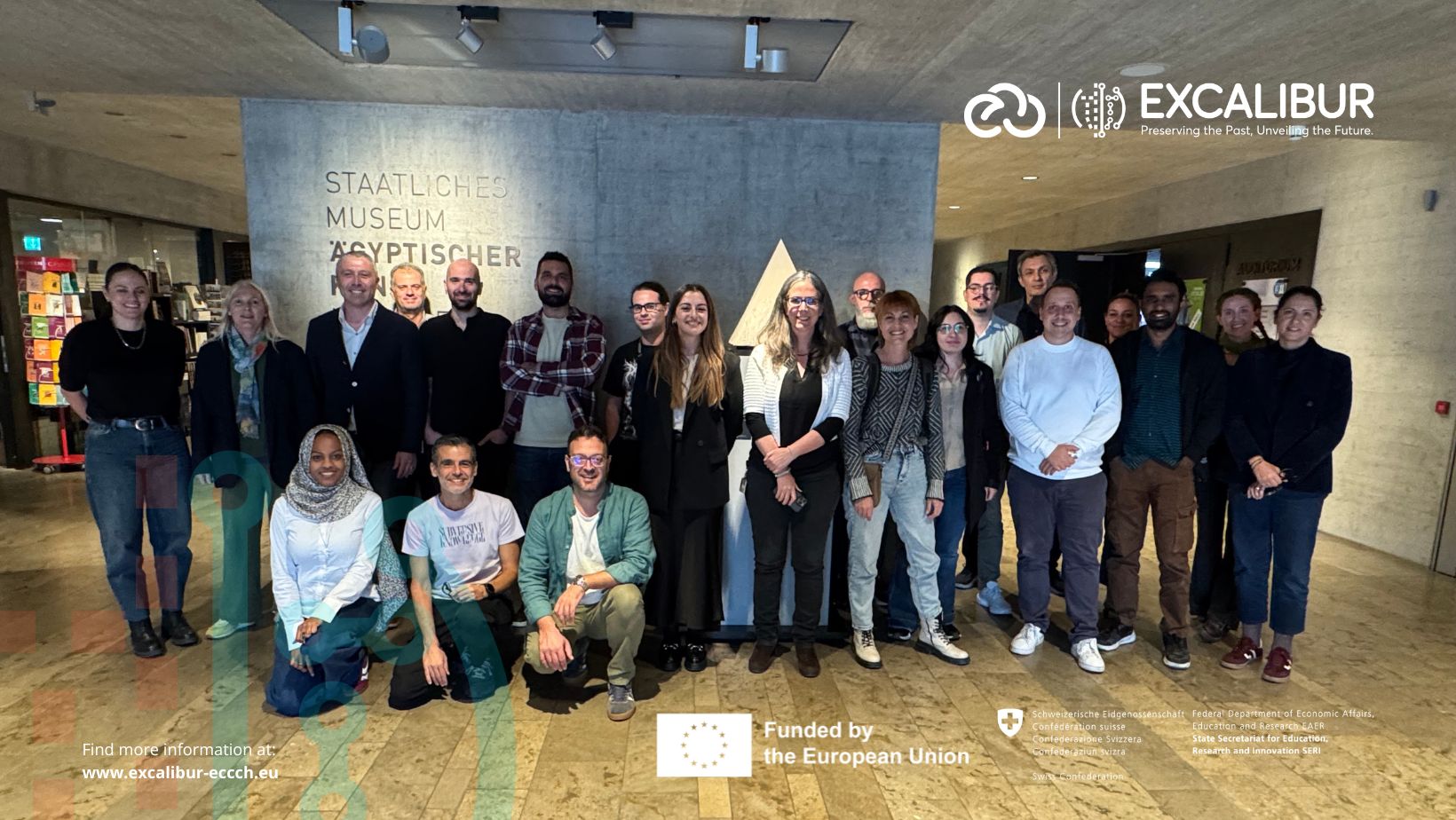
BHV research group, coordinator of the EXCALIBUR ECCCH project, attended the 4th Consortium Meeting, held on 8 – 9 October 2026 in Munich. Hosted by the Staatliches Museum Ägyptischer Kunst München (SMÄK) with the support of the Ludwig-Maximilians-Universität München (LMU), the meeting brought together the full EXCALIBUR consortium for two intensive days of exchange, demonstrations and collaboration.
EXCALIBUR is an EU-funded project contributing to the development of the European Cloud for Cultural Heritage (ECCCH), an open-source infrastructure designed for cultural heritage professionals across Europe. At its core, the project develops innovative and user-friendly toolkits to support the study, conservation and presentation of burial contexts, bridging the gap between cultural heritage and digital technologies. In this regard, Munich’s meeting offered the consortium a uniquely hands-on experience built around one of the EXCALIBUR’s key use cases: the SMÄK collections. Day 1 began with a guided tour of SMÄK’s permanent collections, with a focus on Egyptian funerary culture, followed by an exclusive behind-the-scenes visit to the museum’s restoration laboratory and organics depot.
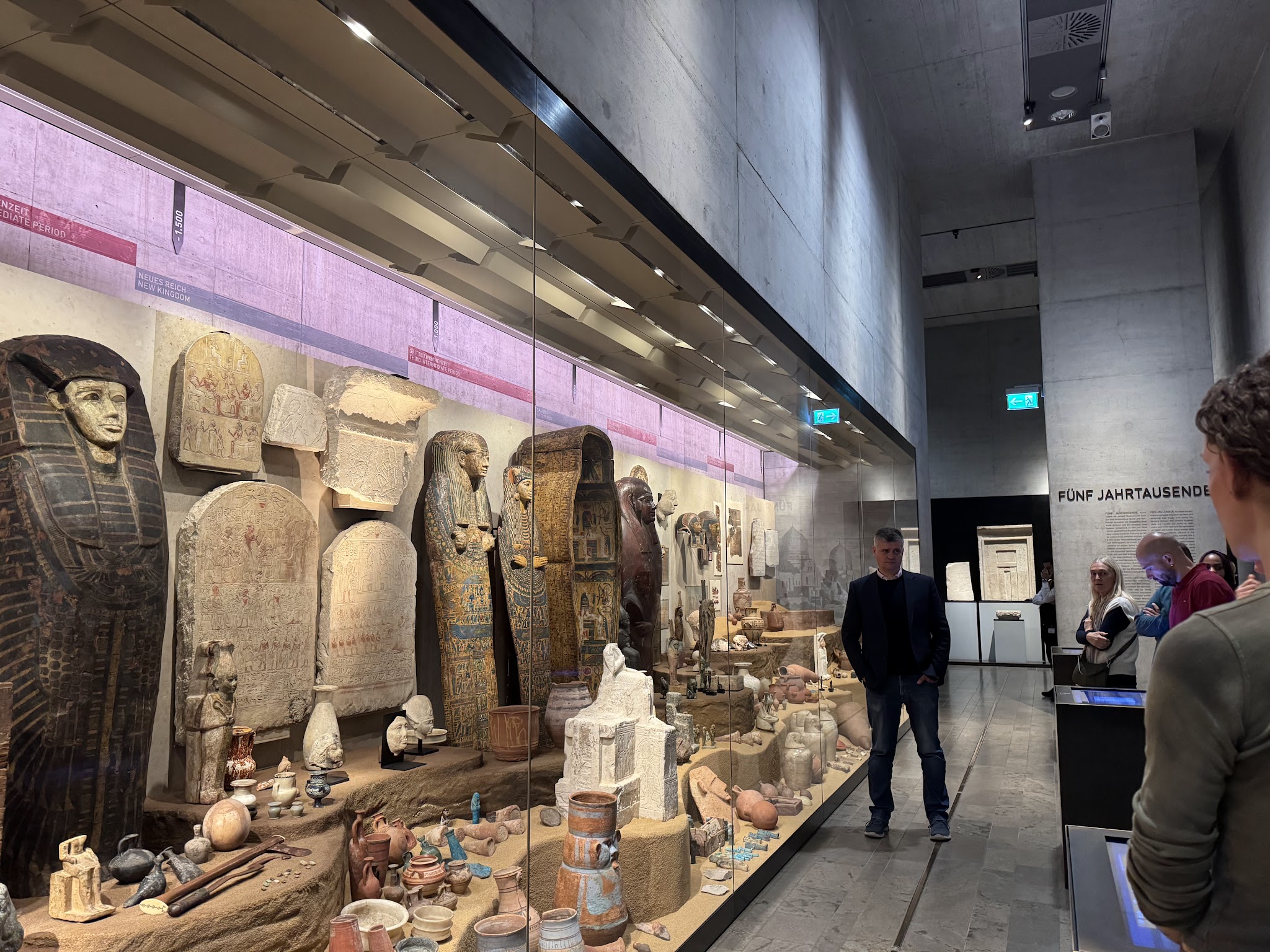
In the restoration lab, EXCALIBUR partners had the opportunity to examine project’s related assets up close, including the “Blue Coffin” and various types of preserved mummies, with discussions covering decoration, wood structure, pigment analysis and conservation issues. Sessions in the organics depot focused on coffins, human remains, mummification practices and animal mummies- offering invaluable insights directly relevant to the project’s toolkits development. The afternoon shifted to the digital side, with toolkits updates, project’s results and demonstrations, grounding the technological progress in the real conservation and digitisation challenges posed by the cultural assets. Day 2 continued at LMU’s Institute for Digital Cultural Heritage Studies, where laboratory and equipment demonstrations were complemented by presentations of digital reconstructions of the project’s cultural objects.
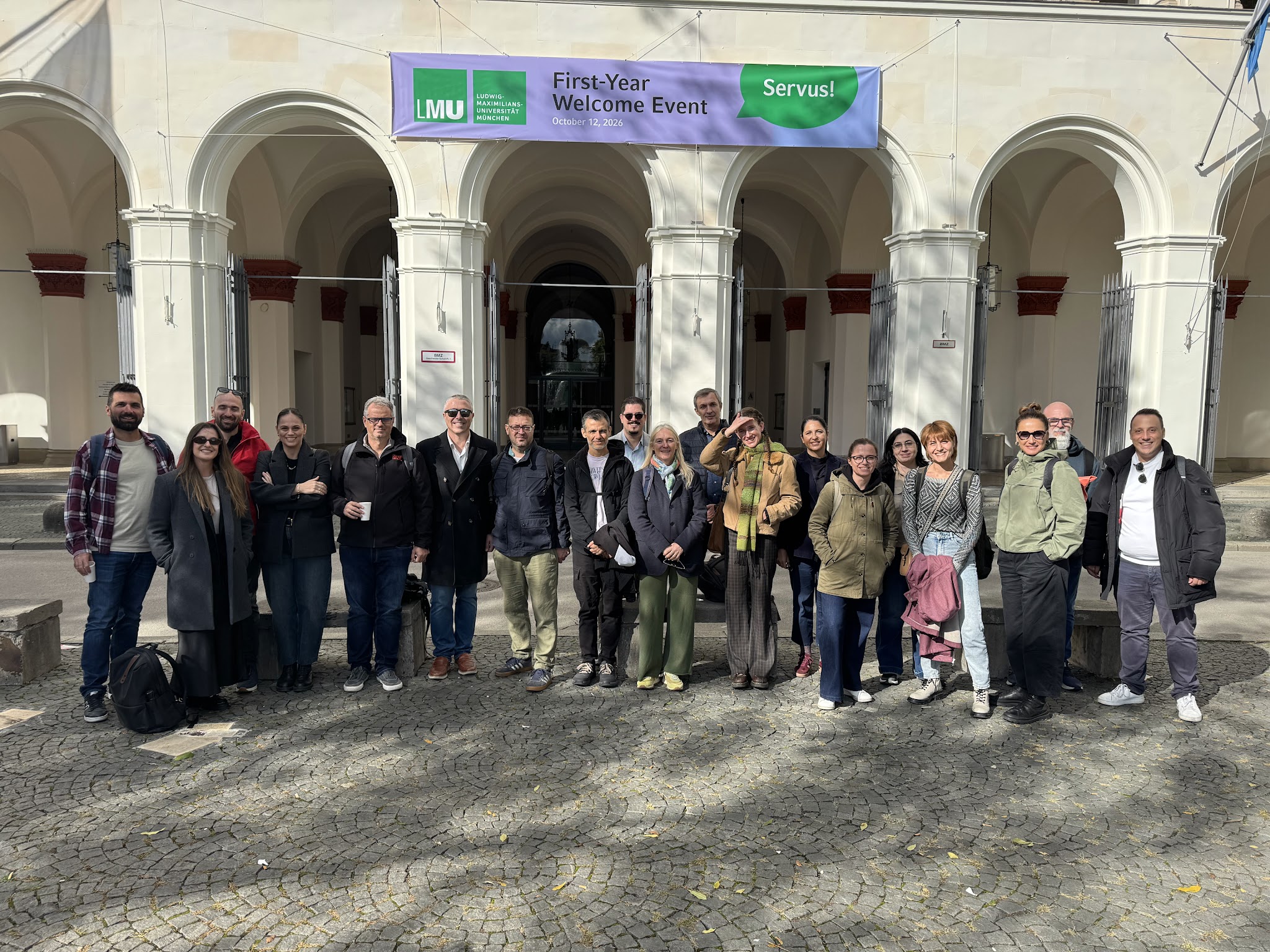
What made the 4th EXCALIBUR CM particularly valuable is the opportunity it created for its partners: bringing museum expertise, heritage sciences and digital innovation into direct dialogue, centred on the actual collections that EXCALIBUR’s solutions are designed to serve.