EXCALIBUR – 2nd consortium meeting in Sant’Antioco, Sardinia
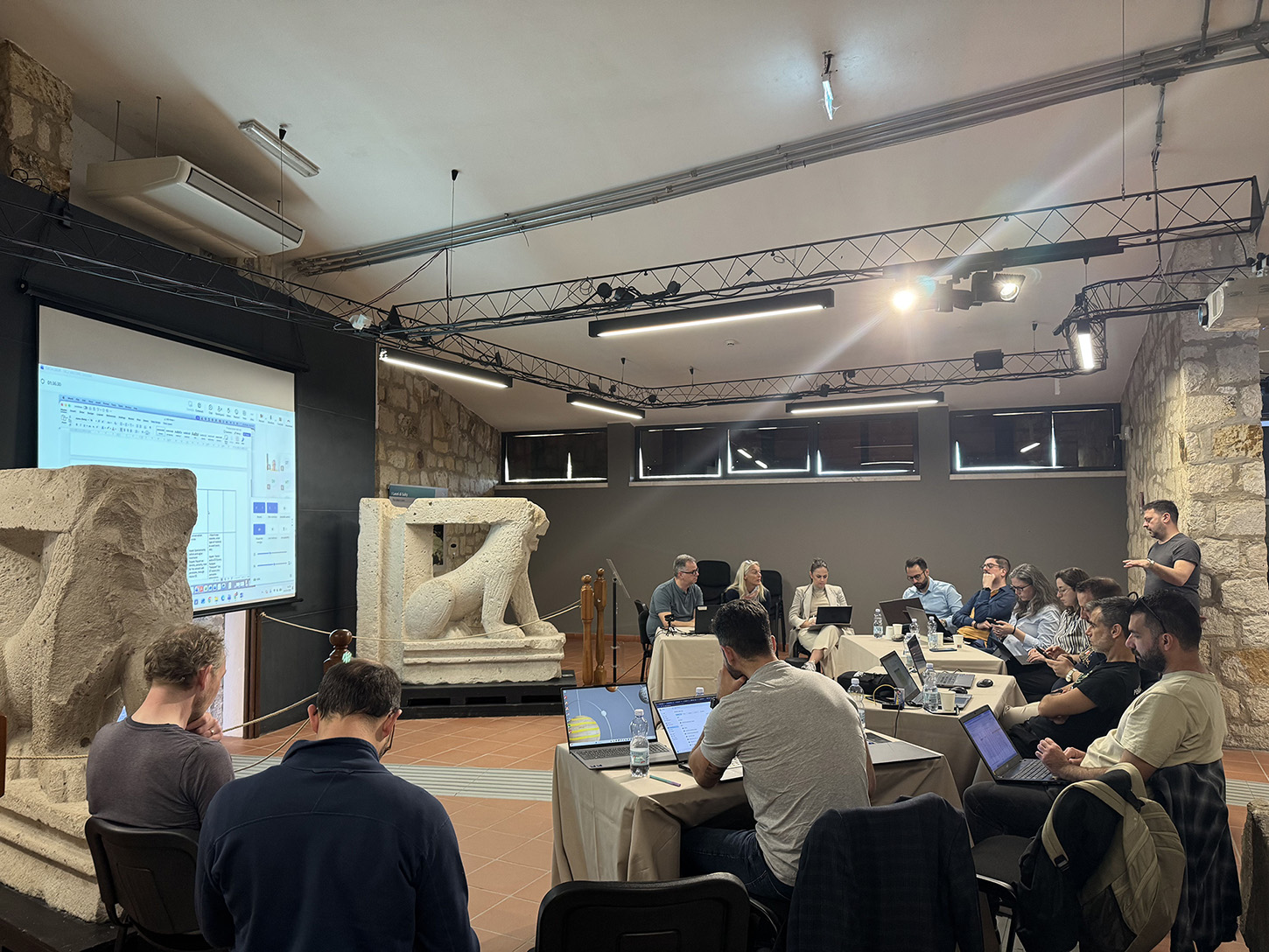
EXCALIBUR project held its second meeting on 23- 24 April 2026 in Sant’Antioco, Sardinia, bringing partners together at a key use-case site: the Necropolis of Is Pirixeddus at Sant’Antioco, which spans from the 6th century BC throughout the Roman period and beyond. The meeting was organised by the project partner, the Superintendency of Archaeology, Fine Arts, and Landscape for the metropolitan city of Cagliari and the provinces of Oristano and Southern Sardinia (SA), with the valuable support of the Center for Advanced Studies, Research and Development in Sardinia (CRS4), also a partner of the EXCALIBUR project. The meeting combined fieldwork and technical planning and contributed to shaping the requirements of the EXCALIBUR toolkits.

The visit allowed partners to engage directly with the archaeological site, the museum collections and the conservation challenges faced by cultural heritage professionals in preserving cultural heritage against time degradation and environmental threats. On the first day, partners explored the Necropolis and visited the Tomb of the Egyptian, one of its most notable monuments. The tomb features red painted decoration and a male human figure sculpted in high relief wearing a simple kilt and the typical Egyptian headdress, the klaft, which indicates that the deceased was a prominent member of the Punic community of Sulky in the 5th century BC.


The consortium also visited the laboratory to examine the artifacts, including a wooden sarcophagus and relics of textiles and human remains, with the aim to better understand the conservation practices. The day concluded at the Archaeological Museum of Sant’ Antioco, where partners explored burial-related artifacts, customs and rituals and experienced multimedia installations, and XR applications that enhanced the museum visit.
The second day focused on translating these insights into technical requirements and meaningful reflections on Use Case 2. By delving into the on-site observations and the input from the cultural heritage professionals, the consortium identified the data and resources needed to support the toolkits’ development, including 3D models, artefact scans, conservation data, excavation reports, object metadata and documentation on burial practices.
Overall, the meeting marked a significant step forward, aligning the project’s technological developments with the real-world heritage challenges and needs. By bridging archaeology, conservation and digital innovation, EXCALIBUR works towards the creation of meaningful, accessible and engaging tools to support the study, the preservation and the experience of burial cultural heritage.